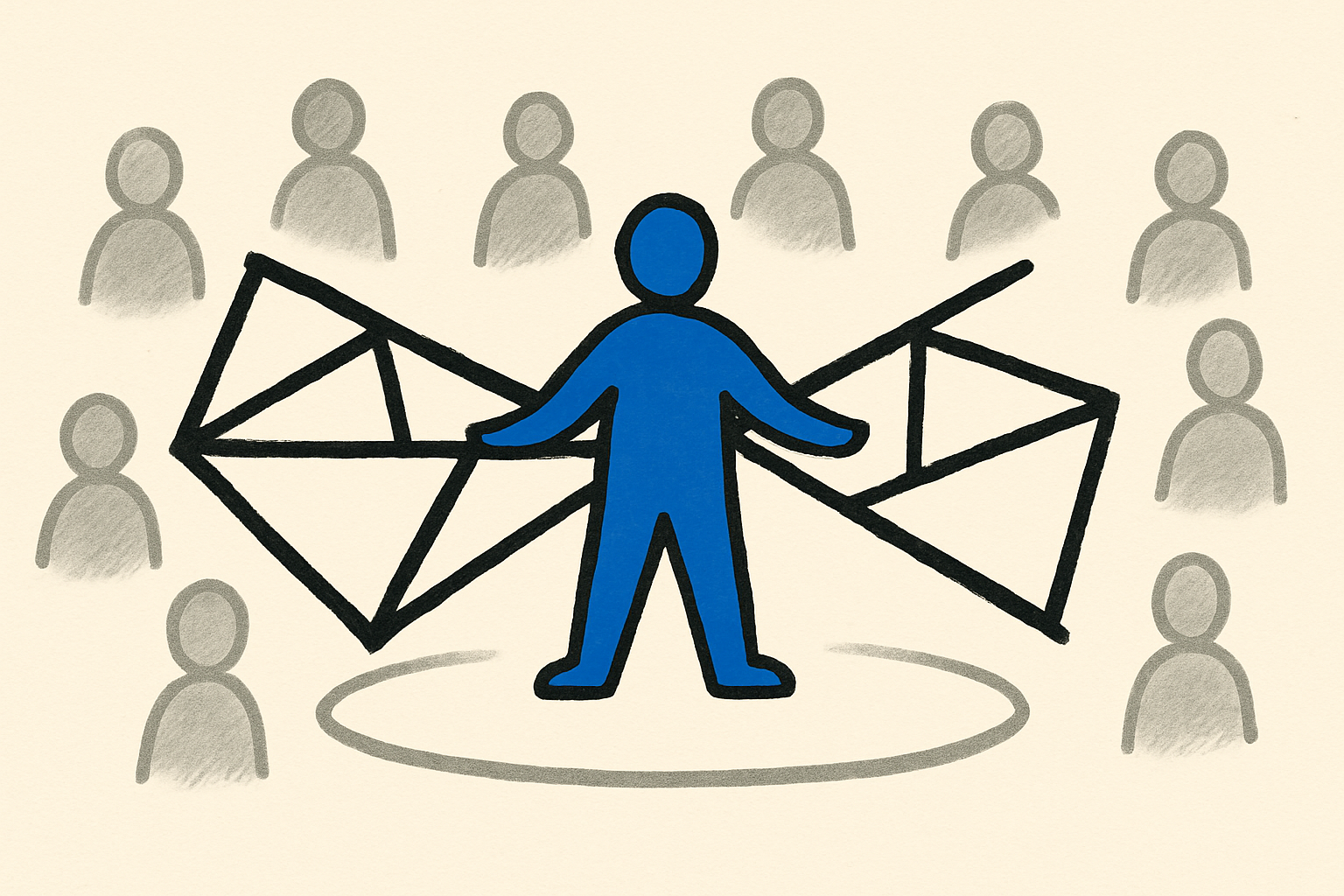
You’re the only content designer on a product team of forty people. There are eight product managers, twelve engineers, fifteen designers, and you.
The product roadmap was built six months ago. Designs are nearly finished. Stakeholders have opinions about every word. And everyone thinks they can write because they passed English in high school.
You’re supposed to “have influence.”
Traditional advice says: Build relationships! Show ROI! Get a seat at the table! Speak the language of business!
This advice isn’t wrong. It’s just insufficient for the structural reality content designers face.
Here’s what they don’t tell you: when you’re outnumbered 10-to-1 (or 50-to-1), individual tactics fail. You can’t 1:1 with fifty freaking people. You can’t “show ROI” when content’s impact is nearly impossible to isolate. You can’t “get a seat at the table” when you’re always the only content person in the room, so you get outvoted on everything.
The real problem isn’t that you lack influence tactics. It’s that you’re trying to win a structural game with individual moves.
Mature disciplines don’t rely on individual heroics for influence. They create structural conditions where expertise is automatically respected. Product design figured this out. Engineering figured this out. Content design, for one legitimate reason after another, is still fighting battles one by one, person by person, conversation by conversation.
We need to stop asking “how do I get more influence?” and start asking “how do I change the conditions that require me to fight for influence in the first place?”
The structural disadvantages we face
Before we talk about solutions, let’s be honest about the problems. Content designers face specific structural disadvantages that make traditional influence tactics insufficient.
The numbers tell the story brutally. According to the UX Content Collective’s 2025 survey, content designers primarily work with Product Designers (448 respondents), Product Managers (288), UX/Product Leaders (261), and—critically—only 245 work with other content designers. We’re isolated by design, not by accident.
The invisibility problem Good content is invisible. Users don’t notice it. They just accomplish their goals smoothly. Bad content is obvious: users get confused, frustrated, or angry. This means you rarely get credit for preventing problems, but you always get blamed when problems exist.
When a designer ships a beautiful interface, everyone sees it. When an engineer ships a fast feature, everyone feels it. When you prevent a confusing flow, nobody notices. The absence of problems isn’t visible, so your work looks easy.
“The unique strengths of most content designers—deep empathy, attention to detail, a clear feel for systems, exceptional writing chops—are the exact qualities that hold us back in the game within the game of exacting influence in large, product-driven organizations.”
The late arrival problem Content designers are typically brought in after decisions are made. The feature is already scoped. The designs are done. The information architecture is set. Now you’re supposed to “make the words work” within constraints that make good content impossible.
This isn’t just frustrating—it structurally prevents you from influencing the things that matter most. By the time you arrive, the expensive decisions are locked. You’re left optimizing margins while the core structure is broken.
The “anyone can write” problem Everyone literate thinks they can write. They can’t distinguish between forming sentences (which they can do) and crafting effective content (which requires expertise). This means your expertise is constantly questioned in ways that designers’ and engineers’ expertise isn’t.
Nobody tells the engineer “I don’t like how you wrote that code, make it more elegant.” But everyone tells the content designer “I would phrase this differently.” The constant low-level challenges erode your authority. People say they can’t write from a blank page, but oh, do they have feedback!
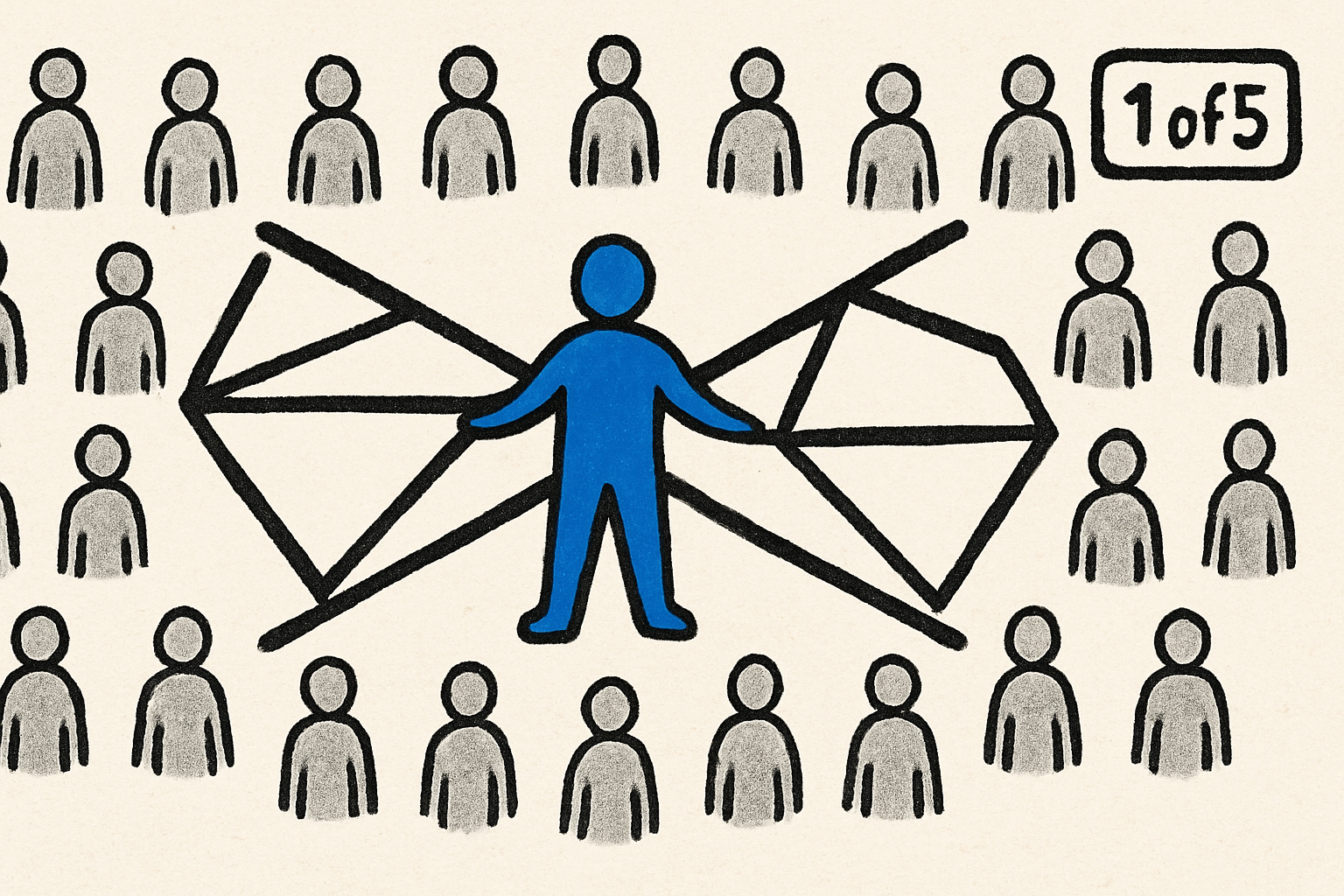
The numbers game You’re usually outnumbered dramatically. Nielsen Norman Group’s research shows the most typical ratio is 1:5:50 (1 researcher to 5 designers to 50 developers), with 50% of teams having at least 1 designer for every 10 developers. Content designers? Often not even counted separately. When you’re the only content person among dozens of others, simple math means you lose votes.
The measurement problem Content’s impact is real but hard to isolate. The UX Content Collective noted this challenge explicitly in 2024: “Unlike a product manager who can point to clear-cut signs such as revenue, profit, or feature completion rates, proving the impact of design takes work.”
When you can’t prove impact cleanly, your recommendations become “opinions” that can be overridden by anyone with a louder opinion. Engineers show performance metrics. Designers show usability metrics. You show... vibes?
These aren’t individual failures. They’re structural conditions. And they require structural solutions.
Why traditional tactics fail at scale
The advice you hear at conferences sounds reasonable: build relationships, show ROI, speak the language of business, get a seat at the table. It’s not wrong—it’s just insufficient when you’re structurally disadvantaged.
Research from AnswerLab in 2024, based on interviews with UX leaders from Google, Slack, and FedEx, found that most UX leaders rate their influence at only 6-7 out of 10. And these are people with teams, budgets, and organizational recognition. For solo content designers, the challenge is exponentially harder.
“Build relationships” fails at scale
When you’re 1:40, you literally can’t build meaningful relationships with everyone. Even if you 1:1’d every stakeholder monthly, you’d spend 20% of your time in relationship-building meetings. And stakeholders change. Teams shift. You’re constantly rebuilding.
The UX Content Collective’s data shows that “content designers are more likely to collaborate with UX researchers as they have more years of experience”, but this takes years to develop, and you need influence now.
Besides, Nielsen Norman Group showed that a “higher designer-to-developer ratio alone does not mean greater maturity or impact”, structure matters more than numbers. We’ll get into that more.
“Show ROI” fails when impact is spread out
Content’s impact is real but rarely isolated. Support tickets go down, so is that content, design, or the feature working better? Conversion increases, but is that copy, layout, or product-market fit improving?
As the UX Content Collective noted: “Unfortunately, it can be difficult for content designers to demonstrate impact.” You end up with correlation, not causation. And correlation doesn’t win arguments against people with stronger structural positions. It doesn’t stop me from trying, anyway!
“Speak the language of business” fails when you’re excluded
This advice assumes you’re in the room when business decisions are made. But you’re often not. Strategy is set before you’re consulted. You’re asked to “speak the language of business” about decisions that were made without considering content implications.
“Over time, I’ve seen a pattern of common refrains from content designers across the tech industry: pay us the same as product designers. Loop us in earlier. But say those chestnuts enough without demonstrating substantial impact, and they start to sound tired, real fast.”
“Get a seat at the table” fails when the table is hostile, or never existed
Even when you get invited to strategy meetings, you’re often the only content person. Everyone else has tribal allies. Design has design. Engineering has engineering. Product has product. You have... yourself? And even that, part-time?
AnswerLab’s research identified structural obstacles to influence: where UX sits in the organization (design-led, product-led, or engineering-led), UX maturity and customer obsession level, and how executives socialize UX in the company. For content design, these obstacles are even more pronounced.
Five structural strategies that are worth a shot
Individual tactics fail. Structural strategies work. Here’s how to change the game instead of just playing it better:
1. Make your expertise scarce and specific
Don’t position yourself as “the writer” or “the word person.” That makes you fungible—anyone who can write sentences becomes a competitor.
Instead, position yourself as the expert in something designers and PMs can’t do themselves. The UX Content Collective’s 2024 skills analysis shows what’s becoming essential: content-specific research and testing, translation and localization expertise, AI literacy and operations, systems thinking.
Be the person who understands how users make decisions Not just “what users want,” but the cognitive processes, mental models, and decision heuristics. This requires research, frameworks, and systematic thinking. Most designers and PMs don’t have this expertise.
Be the person who translates complexity You’re not just “making things simpler”—you’re understanding domain complexity and architecting information flows that match user mental models. This is specialized skill, not just “good writing.”
Be the person who understands content operations Localization, legal review, versioning, content lifecycle, governance. These are specialized domains that most people find boring—which makes them valuable for you to own.
When your expertise is scarce and specific, people need you. They can’t just “write it themselves.” Your value becomes structural, not incidental.
2. Create artifacts that force early involvement
Stop being reactive. Create artifacts that structurally require your involvement before decisions are locked.
AnswerLab’s research found that successful UX leaders shift from “vendor to partner” mentality—from reactive service to proactive partnership. The same applies to content design, but it requires structural mechanisms to make that shift work. So think about delivering these nuggets to drive that shift:
Content models before design Show what content is needed before anyone designs screens. A content model reveals information architecture problems that wireframes hide. When the team realizes they don’t know what content they need, you’re suddenly essential to planning.
User need statements that gate features “We’re building X” is a solution. “Users need to accomplish Y” is a problem statement. Own the problem layer, and you control what gets built. Create a requirement that every feature starts with documented user needs, and you’re in the room from day zero.
Decision frameworks that require content input When teams make tradeoffs, they often optimize for design elegance or technical simplicity. Create frameworks that surface content implications explicitly: “How many words can this interface handle?” “What reading level does this assume?” “How does this work in other languages?”
When these questions become standard parts of decision-making, your expertise becomes structurally necessary.
3. Train everyone to be better with content
This sounds counterintuitive: why would you make yourself less necessary?
But multiplying your impact through others creates structural influence that individual contributions can’t match. As AnswerLab noted, being an “advisor vs. gatekeeper”, or collaborative rather than controlling, builds more influence. Yes, as crazy as it sounds, you need to start packaging and giving things away.
Teach designers content principles When designers understand how hierarchy, scannability, and reading patterns work, they make better design decisions. They leave appropriate space for content. They don’t create interfaces that require impossible brevity.
Teach PMs how to write problem statements The UX Content Collective’s research shows that “understanding how their goals intersect with the goals of other products” is key to PM relationships. When you teach PMs to write better problem statements, they bring you better projects that actually need solving.
Create self-service templates for common patterns Error messages, empty states, confirmation screens—these follow patterns. Create templates with good guidance, and teams can handle routine content themselves. Your scarce time goes to genuinely hard problems.
This strategy seems risky: won’t you become less necessary? Actually, the opposite happens. When everyone’s baseline competency increases, harder problems surface. Complex challenges that were buried under routine problems become visible. Your expertise gets applied to genuinely difficult work instead of being spent on basic edits.
4. Pick your battles strategically
When you’re outnumbered, you can’t fight every battle. You’ll lose most of them, and you’ll burn credibility on fights that don’t matter.
“It’s about shedding the inferiority complex and focusing on the work.”
But focusing means choosing.
Let some things go Not everything matters equally. The button label that’s slightly awkward but functional? Let it go. Save your capital for battles that matter.
Focus on systemic changes over individual fixes One good template prevents a hundred bad implementations. One principle in the design system beats a thousand line edits. Stop optimizing individual instances. Change the system that creates those instances.
Pick visible, valuable fights When you do fight, pick battles where:
- The user impact is demonstrably significant
- The fix is clear and not too expensive
- Success will be visible to stakeholders
- Winning establishes a useful precedent
As AnswerLab’s research showed, successful influencers focus on “delivering exceptional service not just to their customers, but also to their colleagues and the organization as a whole.” Pick fights that serve everyone, not just your preferences.
5. Make your work visible in unusual ways
Your best work is invisible—preventing problems people never see. You need mechanisms to make invisible work visible.
The UX Content Collective identified this as crucial: “Demonstrating impact challenge” means finding creative ways to show value. The Meta content designer agreed: “Leveraging the same tactics as other well-established product functions—clear hypotheses, data-driven arguments, a discussion of tradeoffs, a knack for visual storytelling.”
Document problems you solved Create before/after comparisons showing what would have shipped without content design input. Don’t make it about your ego—make it about the pattern. “Here’s how features often start, and here’s what content thinking contributes.”
Share user research where content was the issue When usability testing reveals content problems, document it broadly. Show the confusion, show the fix, show the improvement. Content problems are easier to see when users struggle with them.
Quantify content’s operational impact Support tickets that decreased after content improvements. Time-to-completion that improved. Errors that reduced. You can’t always isolate content’s impact on conversion, but you can show operational wins.
Make your decision-making process visible When someone asks “why did you write it this way?”, don’t just explain the specific choice. Share the framework you used to evaluate options. Show the tradeoffs you considered. Make your expertise legible.
These mechanisms don’t just make your work visible. They make your way of thinking visible. And when people understand how you think, they bring you problems earlier.
From individual heroics to structural power
Notice what these strategies have in common: they change the environment instead of just optimizing your behavior within it.
Traditional advice focuses on individual optimization: be better at relationships, be better at showing value, be better at communication. All useful. None sufficient.
The sentiment data tells the story:
Question: Content designers, how do you feel about the profession?
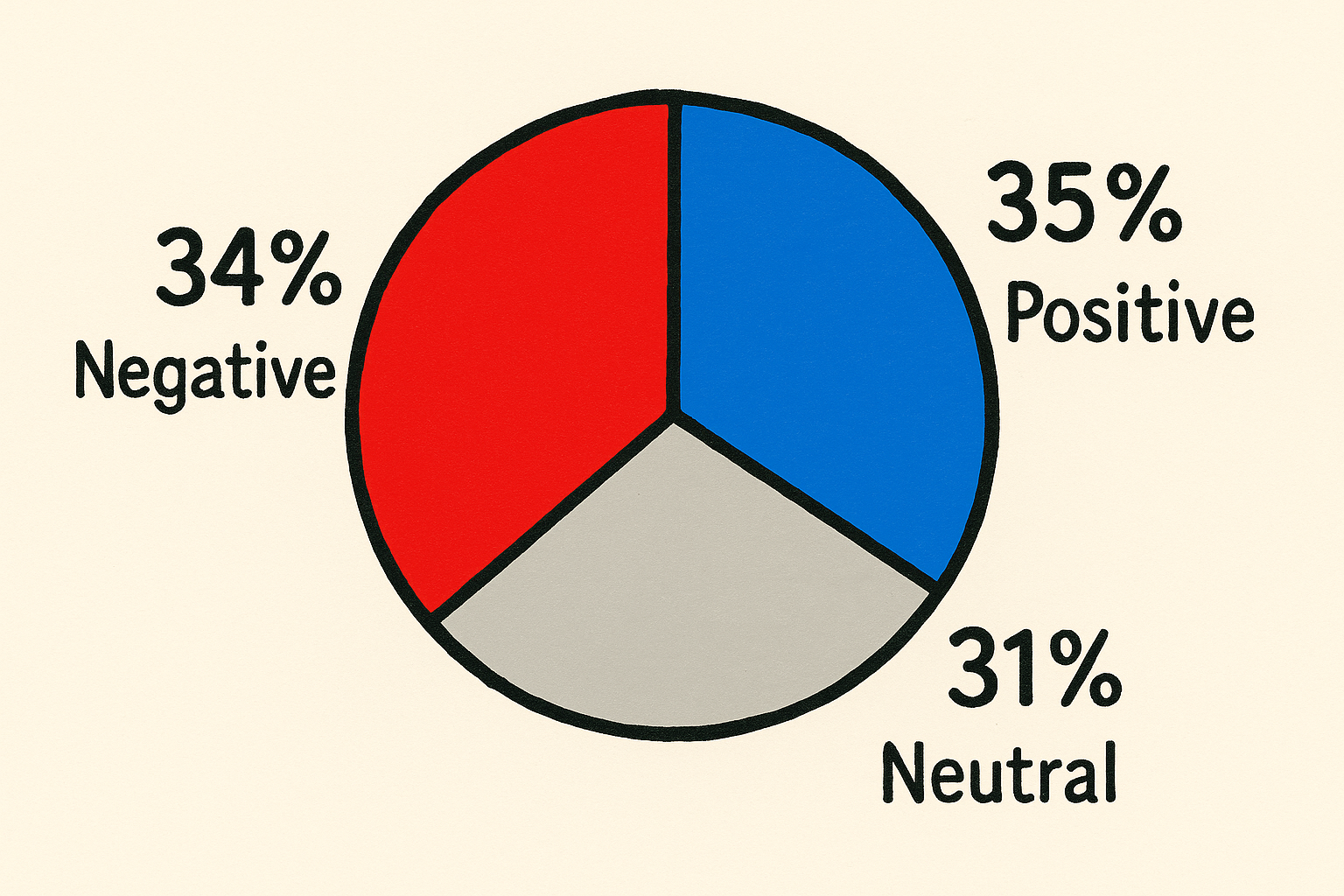
(UX Content Collective, 2025)
We’re literally split because individual tactics work for some but not all. One respondent captured the frustration: “I am somewhat frustrated about the lack of progress I’m making in making the role of content design visible and valued despite all the effort.”
Structural strategies change the rules:
- Scarce expertise changes how people value you
- Process artifacts change when you’re involved
- Training others changes who can do content thinking
- Strategic selectivity changes how your interventions are received
- Visible thinking changes how people understand your contribution
These aren’t quick wins. They take time to implement. They require sustained effort. They demand thinking beyond individual features to organizational systems.
But they create lasting change. Individual tactics require constant maintenance—you’re always rebuilding relationships, re-proving value, re-fighting battles. Structural strategies compound. Once implemented, they continue working without your constant attention.
Practical starting points
You can’t implement everything at once. Start with one structural strategy:
If you’re constantly brought in late: Create one artifact that forces earlier involvement. A content model template. A feature scorecard. Something that makes content considerations visible before design locks in.
If you’re overwhelmed with small requests: Build one self-service capability. A template library. A decision framework. Something that lets teams handle routine content without routing through you.
If your work is invisible: Document one major problem you solved. Create one before/after case study. Make one piece of invisible work visible to stakeholders.
If you lack specialized positioning: Claim one domain of expertise. The UX Content Collective identified key emerging skills: conversational design, AI operations, content-specific research. Pick one that differentiates you.
If you’re fighting too many battles: Audit your fights for the last month. Which ones mattered? Which ones didn’t? Define criteria for future battles.
Pick one. Implement it well. Let it compound. Add another.
Individual changes feel slow. But structural changes accumulate. In six months, you’ll operate in a different environment. In a year, you’ll have structural influence that doesn’t require constant individual effort.
The shift
Content designers always risk becoming stuck in the individual heroics phase. Visual designers get it, too. It’s called Supermanning, which is gender concrete in my opinion. We celebrate the talented practitioner who can navigate difficult stakeholders, produce great work under impossible constraints, and maintain influence through sheer force of personality.
These people are talented. But their success doesn’t scale. When they leave, the influence leaves with them. The organization hasn’t learned any structural lessons, they just temporarily benefited from individual excellence.
Mature disciplines create systems that make expertise structurally valuable. They build processes that require specialized input. They establish conditions where practitioners can focus on hard problems instead of constantly justifying their existence.
The game is rigged against content designers, and the amount of gaslighting you’re experiencing, intentional or no, is built into organizations by default. But structural strategies let us change the game instead of just playing it better. And increasingly, the evidence shows that content designers who focus on structural change report better outcomes than those who rely on individual tactics alone.
The path forward isn’t more individual excellence. It’s structural transformation. The sooner we recognize this, the sooner we can stop fighting battles we’re structurally destined to lose and start changing the conditions that create those battles in the first place.
Previously:
 Scott Pierce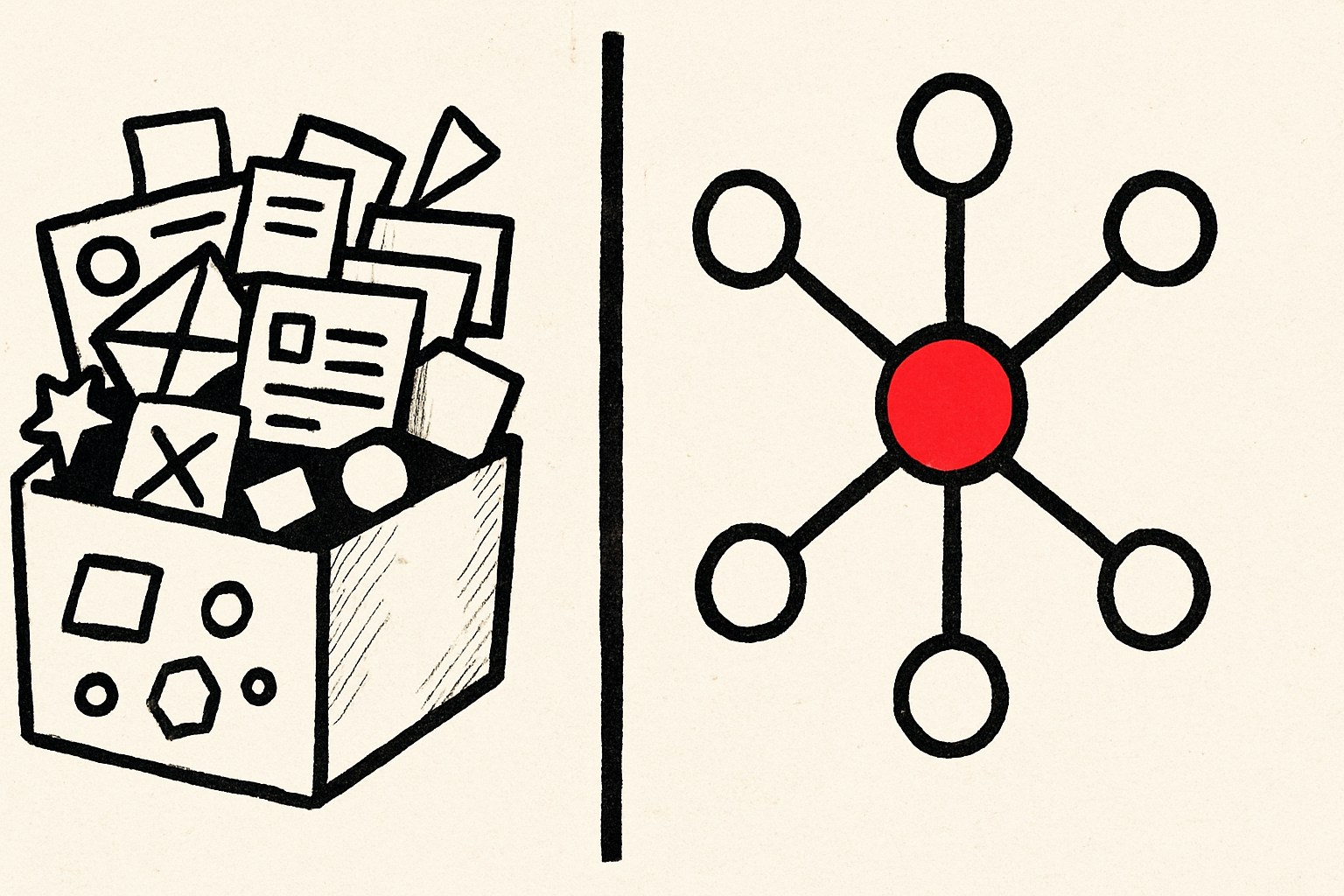
Coming next: “Beyond single source of truth: Designing for distributed coherence”
Read more
- UX Content Collective. Content design and UX writer salary & industry survey (2025).
- AnswerLab (Buckner Chowdhry). Maximizing your UX influence (2024)
- UX Content Collective. Essential content design skills for UX (2024).
- Nielsen Norman Group. Typical designer-to-developer ratios (2020).